
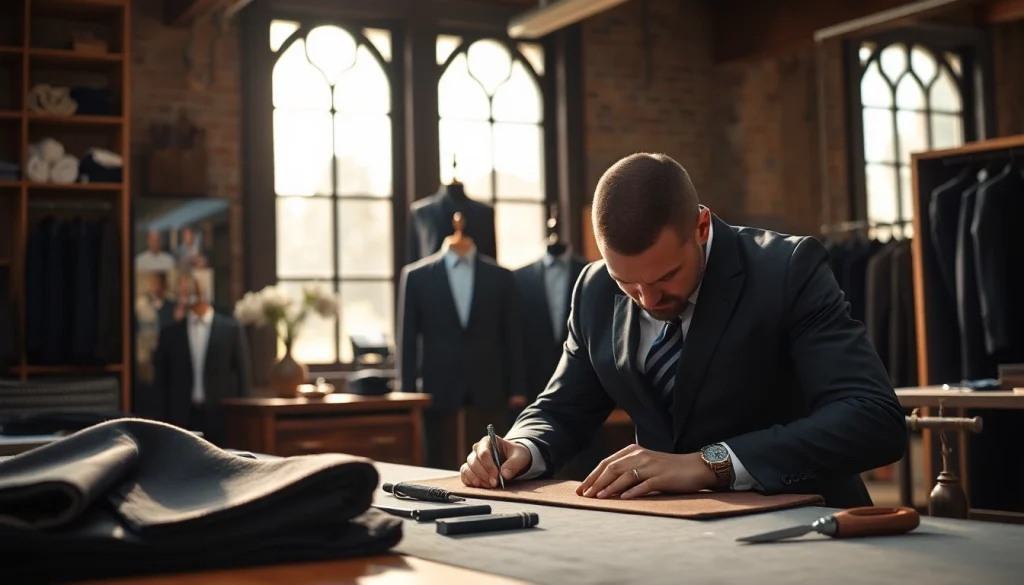
Understanding Bespoke Custom Made Suits
The Definition of Bespoke
Bespoke custom made suits represent the pinnacle of sartorial excellence. The term “bespoke” originates from the practice in Savile Row, London, where garments are “bespoken” for individual clients. This full custom tailoring process ensures that the suit is crafted specifically for the individual, from the choice of fabrics to intricate detailing, providing unmatched fit and style. Unlike off-the-rack options, bespoke suits are made entirely from scratch, based on personal measurements and preferences.
Why Choose Bespoke Over Off-the-Rack
Choosing bespoke custom made suits over off-the-rack alternatives has several compelling advantages. Firstly, the fit is precisely tailored to your body, enhancing comfort and silhouette. Off-the-rack suits are designed under broad measurements that can often lead to ill-fitting outcomes.
Secondly, bespoke options allow you to express your personality through fabric selection, cut, and design details. You can choose everything from lapel styles to the fabric type and color, ensuring your suit is a perfect representation of your style.
Finally, the craftsmanship involved in bespoke suits is second to none, with skilled artisans dedicating time and expertise to create a garment that not only fits perfectly but also lasts through the years. For those who value individuality and quality, bespoke custom made suits are the ultimate choice.
Essential Features of Bespoke Custom Made Suits
A bespoke suit is characterized by its unique features that set it apart from other options. Key elements include:
- Personal Measurements: The process begins with a detailed measurement session to ensure a perfect fit.
- Fabric Choice: Clients have the option to select from a wide range of high-quality fabrics, allowing for personalization.
- Customized Design: Clients can influence every aspect of the suit, including lapel style, pocket placement, and button configurations.
- Handcrafted Quality: Each suit is crafted by skilled tailors, ensuring meticulous attention to detail.
- Multiple Fittings: Clients often undergo multiple fittings, refining the suit to achieve the perfect fit.
The Process of Creating Your Bespoke Suit
Initial Consultation and Measurements
The journey of crafting your bespoke suit begins with an initial consultation. This meeting allows the tailor and client to discuss style preferences, occasions, and specific needs. Accurate measurements follow, where various aspects of the body are taken to ensure that the suit will fit flawlessly. This detailed measurement session often includes measuring the shoulder width, chest circumference, waist, hip size, and even the length of the arms and legs.
Selecting Fabrics and Styles
With measurements in hand, the next step is selecting fabrics and styles. An array of materials is presented, ranging from wool and cotton to silk and linen. Each fabric has unique qualities, affecting the suit’s look and feel. Clients can choose their preferred patterns, colors, and textures.
During this stage, various lining options and enhancements such as padding or canvas can also be discussed, further personalizing the suit’s aesthetic and comfort attributes.
Fittings and Adjustments Explained
The fitting process typically occurs in multiple stages: initial, mid, and final fittings. The initial fitting assesses the overall structure of the suit, checking essential elements like shoulder seams, jacket length, and trouser fit. Adjustments are made based on feedback.
The mid fitting allows further refinement, ensuring every detail aligns with the client’s vision. Finally, the last fitting occurs once all adjustments have been completed, allowing the client to see their tailored suit in its complete form before final delivery.
Choosing the Right Fabrics for Your Suit
Different Types of Suit Fabrics
When it comes to bespoke suits, fabric choice is crucial. Different fabrics serve various purposes and seasons. Wool is the most popular option due to its versatility and breathability. For summer, lighter fabrics like linen or cotton offer comfort, while for winter, heavier materials like flannel provide warmth.
More luxurious options include cashmere and silk blends which offer a refined look and feel. Understanding the fabric type will help you to select the right suit for different occasions and climates.
Understanding Fabric Quality and Durability
Not all fabrics are created equal; the quality of fabric significantly influences the suit’s lifespan and appearance. High-quality wool, for instance, will not only drape better but will also be more resistant to wrinkles and creasing.
When assessing fabric quality, consider factors such as thread count, fiber length, and weave tightness. These characteristics can affect how the suit behaves over time, impacting durability and overall performance.
How Fabric Choice Affects Suit Style
Fabric type directly influences the overall style of the suit. A sleek, lightweight fabric can create a more contemporary fit, while heavier materials naturally lend themselves to a more traditional aesthetic. Patterns can also play a significant role; a bold check fabric may suggest a more casual or creative style, whereas a plain worsted wool suit expresses formality and sophistication.
The fabric also contributes to the suit’s drape and structure, ensuring that it holds its form throughout wear.
Caring for Your Bespoke Custom Made Suit
Cleaning and Maintenance Tips
Caring for your bespoke suit is essential for maintaining its appearance and longevity. Regular brushing can remove dust and dirt, while steam can help eliminate wrinkles without damaging the fabric. Spot cleaning is recommended for stains; avoid dry cleaning unless necessary, as it can break down fabrics over time.
When to Schedule Professional Tailoring
Even bespoke suits may require adjustments post-purchase. It’s advisable to revisit your tailor for adjustments, especially after weight changes or noticeable wear. Tailoring can enhance fit and appearance, ensuring that it continues to look its best.
Storing Your Suit Properly
Proper storage is crucial to preserving the shape and condition of your bespoke suit. Always use a padded hanger to provide sufficient support and protect the shoulder structure. When not in use, store the suit in a breathable garment bag to protect it from dust and light. Avoid placing it in tight spaces where it could be crumpled or creased.
FAQs About Bespoke Custom Made Suits
What should I expect during a consultation?
Expect to discuss style preferences, the occasion, and get measured accurately to ensure a perfect fit.
How much do bespoke custom made suits typically cost?
Prices generally start around $1,000 and can go up significantly depending on fabric quality and customization options.
How long does it take to create a bespoke suit?
The process can take anywhere from a few weeks to several months, depending on the tailor’s schedule and your specific requests.
Can I customize my suit further with accessories?
Yes, bespoke suits can be paired with custom shirts, ties, and other accessories to create a cohesive look.
What is the difference between bespoke and made-to-measure suits?
Bespoke suits are fully custom and tailored based on your specifications, while made-to-measure suits use a base pattern adjusted to your measurements.