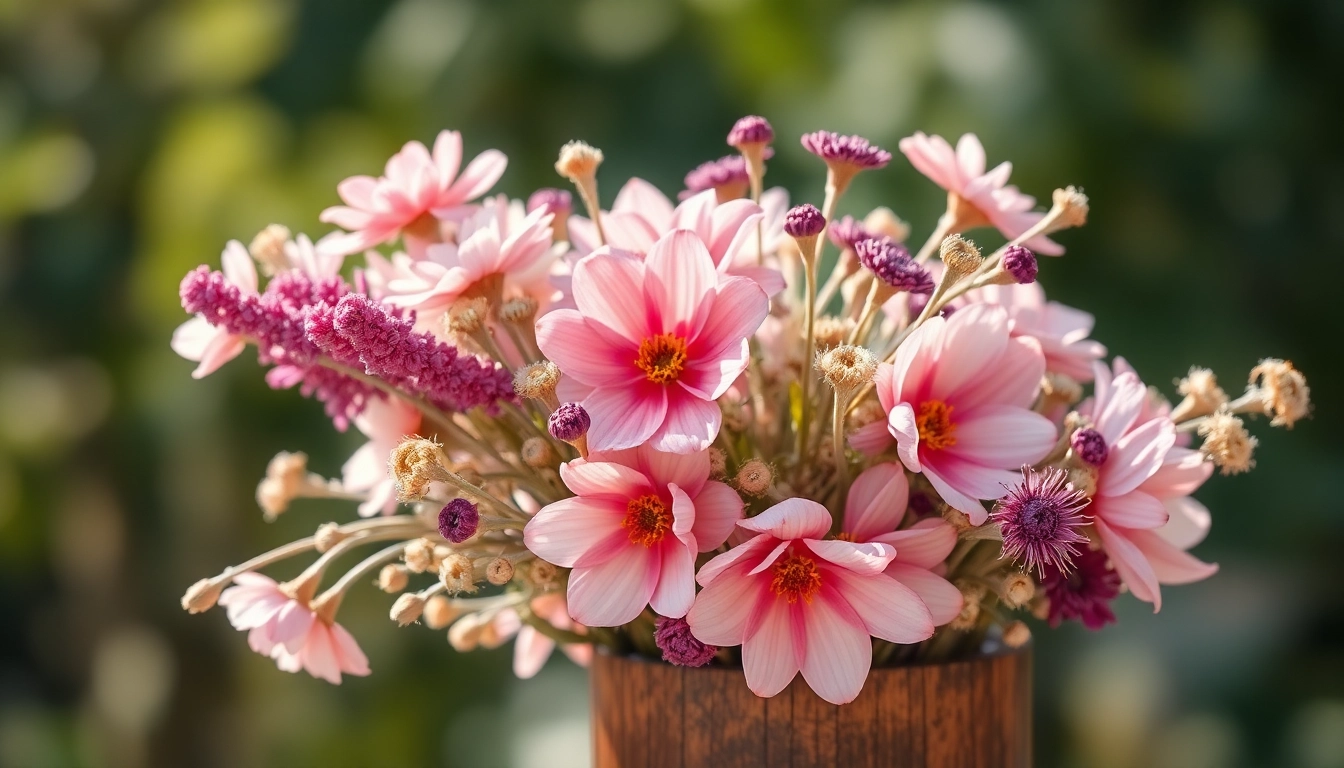
Understanding Dried Flowers: What Are They?
The world of dried flowers is a fascinating one, offering a unique blend of beauty, artistry, and functionality. These botanical treasures are much more than mere decorations; they represent a sustainable choice in floral arrangements that extends beyond the fleeting beauty of fresh blooms. In this section, we will explore the definition of dried flowers, the various types available, how they are created, and the myriad benefits they offer.
Definition and Types of Dried Flowers
Dried flowers are stems and petals that have been preserved through various methods to maintain their shape and color. Unlike fresh flowers, which have a limited lifespan, dried flowers can last for months or even years, making them ideal for long-term displays. There are several types of dried flowers, including:
- Everlastings: Flowers like strawflowers and statice hold their color and shape for a long time.
- Herbaceous Plants: Lavender and thyme not only dry well but offer fragrance to arrangements.
- Seed Pods and Grasses: Adding texture, elements like bunny tails and wheat balance floral arrangements.
- Floral Bunches: Pre-arranged selections available in various species for easy styling.
How Dried Flowers Are Made
The process of making dried flowers can be done through several methods, each yielding different results. The most popular techniques include:
- Air Drying: Hanging flowers upside down in a dark, dry space allows moisture to evaporate naturally.
- Pressing: Flattening flowers between heavy books or in a flower press retains their shape.
- Silica Gel Drying: This involves submerging flowers in silica gel, which absorbs moisture quickly while preserving color.
Regardless of the method used, it's essential to select robust flowers with low moisture content for optimal results.
Benefits of Using Dried Flowers
Dried flowers come with numerous advantages, making them a popular choice for both decorators and DIY enthusiasts:
- Durability: With proper care, these blooms can maintain their beauty for years, reducing the need for frequent replacements.
- Versatility: Dried flowers can be used in various settings—home decor, weddings, and special events—adapting to multiple styles.
- Eco-Friendly: They align with sustainable practices by reducing waste and often involve local sourcing or home gardening.
- Symbolism: Many dried flowers carry meanings, adding emotional depth to any arrangement or gift.
Choosing the Right Dried Flowers for Your Space
When selecting dried flowers for your home or event, several factors influence their effectiveness in enhancing your decor. Understanding your space, color palettes, and seasonal availability can dramatically improve your design's impact.
Top Dried Flowers for Home Decor
Some dried flowers are particularly well-suited for interior decoration. Here are some top choices:
- Lavender: Known for its calming fragrance, lavender adds a rustic touch to any room.
- These soft, fluffy grasses bring texture and dimension to arrangements.
- Roses: Dried roses retain their beauty and make romantic additions to any decor.
- Statice: This flower retains its color well, offering vibrant splashes in neutral settings.
Color Palette Considerations
When choosing dried flowers, align their colors with your existing color scheme to achieve a harmonious look. Neutral tones like beige, white, or muted pastels work beautifully in minimalist spaces, while vibrant blooms can add a pop of color to more eclectic designs. Consider the following tips:
- Use cool-toned blooms for modern aesthetics.
- Choose warm colors for a cozy, inviting vibe.
- Mix and match shades to create a dynamic look.
Seasonal Dried Flower Selections
Taking advantage of seasonal dried flowers can enhance the natural beauty of your decor and maintain relevance throughout the year. Spring and summer flowers like daisies are perfect for bright arrangements, while autumn can feature deep oranges and reds from dried leaves and flowers like celosia. Winter arrangements can include evergreens, adding warmth amidst chilly temperatures. Pay attention to local seasonal varieties for sustainable sourcing.
Creative Ideas for Incorporating Dried Flowers
Dried flowers inspire creativity, offering limitless possibilities for unique arrangements and projects. Whether you’re seasoned in floral design or just beginning, here are several innovative ways to incorporate dried flowers into your environment.
Wreaths and Garlands with Dried Flowers
Dried flower wreaths and garlands can serve as stunning focal points. You can create seasonal wreaths for holidays or festive occasions by choosing appropriate colors and blooms. To craft your own:
- Gather a variety of dried flowers, greenery, and a wreath base.
- Secure flowers to the base using hot glue or floral wire.
- Add finishing touches like ribbons or ornaments for a personal touch.
Dried Flowers in Floral Arrangements
Incorporating dried flowers into traditional arrangements elevates their charm and durability. They can replace or complement fresh flowers in vases, providing texture and longevity. Here’s how you can create a beautiful arrangement:
- Select a mix of dried flowers that harmonize with your setting.
- Use a sturdy vase to support the weight of the dried stems.
- Mix heights and textures for visual interest.
DIY Projects Featuring Dried Flowers
There are endless DIY projects that showcase dried flowers. From handmade cards to resin art, these flowers can enhance various crafts. For example:
- Create pressed flower bookmarks by sandwiching dried flowers between two pieces of clear contact paper.
- Add dried flowers to homemade candles for a unique design.
- Make potpourri by mixing dried flowers with essential oils and spices for a fragrant blend.
Caring for Your Dried Flowers
Although dried flowers are long-lasting, proper care can significantly extend their lifespan and maintain their appearance. Here are some essential maintenance tips:
Maintenance Tips for Dried Flowers
To ensure your dried flowers stay beautiful:
- Avoid placing them in direct sunlight, as this can fade colors.
- Keep them in low-humidity environments to prevent degradation.
- Dust regularly using a soft brush to maintain their appearance.
How to Preserve Dried Flowers
If you wish to extend the life of your dried flowers further, consider these preservation methods:
- Store them in airtight containers to prevent moisture exposure.
- Keep out of reach of pets and children to avoid accidental damage.
- Consider using a floral sealant sparingly to maintain color vibrancy.
Common Mistakes to Avoid
Avoid these common pitfalls when caring for dried flowers:
- Neglecting to dust regularly, which can lead to buildup and deterioration.
- Using fresh flower techniques such as watering, which will cause drooping.
- Ignoring signs of damage, such as discoloration or brittleness.
Frequently Asked Questions About Dried Flowers
What is the significance of dried flowers?
Dried flowers symbolize endurance and beauty, encapsulating resilience. They bring warmth and nostalgia to any space, making them an ideal decorative element.
Which flowers make the best dried flowers?
The best dried flowers tend to have low moisture content. Popular options include roses, lavender, and statice, known for their shape retention and color preservation.
How long do dried flowers last?
With proper care, dried flowers can last a few years. Keep them away from humidity and direct sunlight to maintain their charm.
Can dried flowers be scented?
Yes! You can enhance their fragrance with essential oils or potpourri, but be cautious not to saturate them to avoid damage.
Are dried flowers eco-friendly?
Dried flowers are typically sustainable and often sourced locally. They reduce waste and offer a greener alternative to fresh-cut blooms.