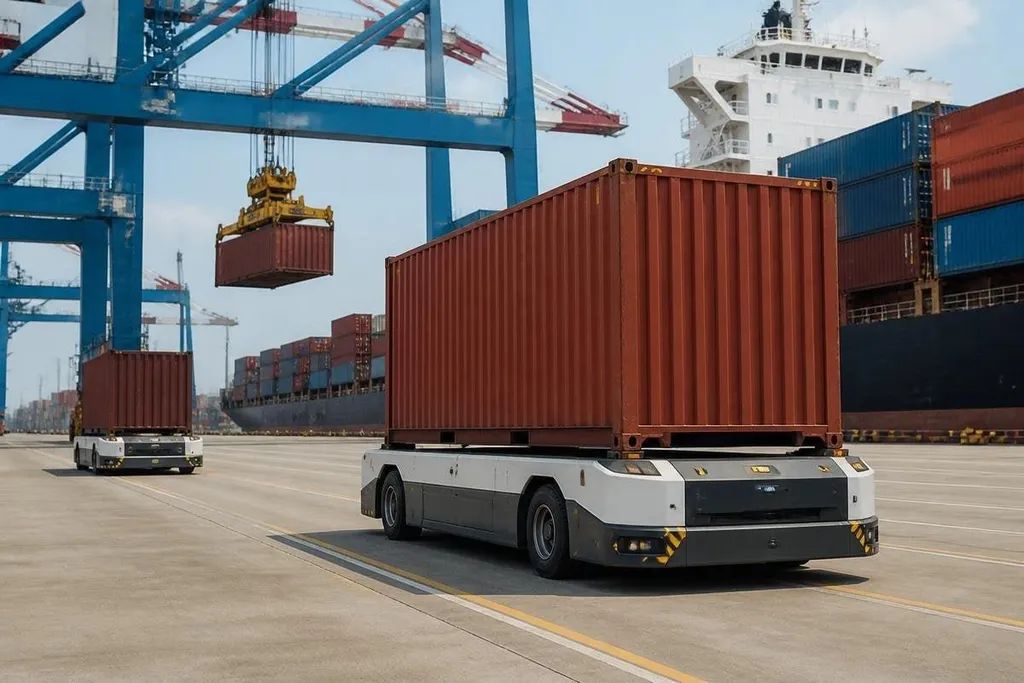
A shipping robot may be an autonomous vessel, a robot crane, or an underwater inspection system. Each handles a narrow job around ports and ships, where repeated work, distance, and safety risks make automation useful.
- Port robots move containers between storage areas and the quay.
- Autonomous vessels use sensors and software to follow planned routes.
- Inspection robots check hulls and equipment without sending a person underwater.
Where the robots work
Ports offer the clearest starting point. Container yards already use fixed routes, marked lanes, and repeatable handoffs, so a vehicle can move a container between a crane and a storage position with limited human direction.
A yard robot needs several systems to work together. Cameras and LiDAR measure nearby objects, while satellite positioning gives a wider location reference.
Fleet software assigns jobs. If a truck, person, or loose container blocks the route, the robot needs a safe stop and a new instruction.
Ship-to-shore cranes add another form of automation. Their arms move containers between a vessel and the dock, while software checks the planned order and tracks each box. The benefit comes from fewer manual steps between unloading and the next move, not from the crane acting alone.
Maritime trade depends on these handoffs. A delay in one part of the port can leave a crane waiting, a truck idle, or a ship at the berth longer than planned.
Robots at sea
Autonomous surface vessels work in a harder setting. Water, changing weather, other vessels, and limited communications all affect the route. The system must read sensor data, follow maritime rules, and pass control to a remote operator when the situation falls outside its limits.
Remote operation changes the job rather than removing it. One operator may watch several vessels through a control system, but that person still needs clear alerts, reliable video, and a way to stop or redirect the vessel. The number of vessels one operator can safely manage must be tested, not assumed.
Small autonomous vessels can suit short routes, surveys, or harbor work because the operating area is easier to define. Larger cargo ships face stricter safety, insurance, and legal questions. A robot that works in a controlled harbor does not automatically work across an ocean.
For a port manager, the useful question is whether a vessel can run its route each day under the stated safety rules. Maritime robotics reporting from Robot24.com can tie a project to its vessel, route, operator, test date, and result. That record matters before the next section looks at the first shipboard jobs likely to reach working ports.
The jobs people may see first
Underwater robots already fit work that is difficult to inspect by eye. A remotely operated vehicle can carry a camera below the waterline and send video to a technician on the surface. The same approach can check a hull, drive shaft, or submerged structure without placing a diver in that space.
Cargo handling is another visible use. Robots can carry loads across a yard, position equipment, or help sort containers. Their value depends on the full route: loading, movement, handoff, charging, and recovery after a stop all count.
The limits are plain. Salt water damages hardware, poor visibility weakens cameras, and a dropped connection can interrupt control. A port also needs marked operating zones, staff training, maintenance access, and a manual process for failures.
What to check before buying
A port team comparing a robot system should ask:
- Job scope: Does it move cargo, inspect equipment, or operate a vessel?
- Operating area: Which routes, water depths, weather conditions, and traffic levels are supported?
- Human control: Can a trained operator stop the system and take control quickly?
- Failure plan: What happens after a sensor fault, lost signal, blocked route, or low battery?
- Port fit: Do existing cranes, trucks, software, and safety rules work with it?
- Proof: Has the maker supplied records from the same type of site and task?
I'd judge a shipping robot by its recovery plan before its top speed. A machine that stops safely and gives staff a clear next step can fit port work; one that needs a special response for every fault will add work.
The next stage will depend on shared operating rules, better records, and deployments that run beyond a short trial. Until those details are public, treat a shipping robot as a tool for a defined task, not a replacement for the whole port.