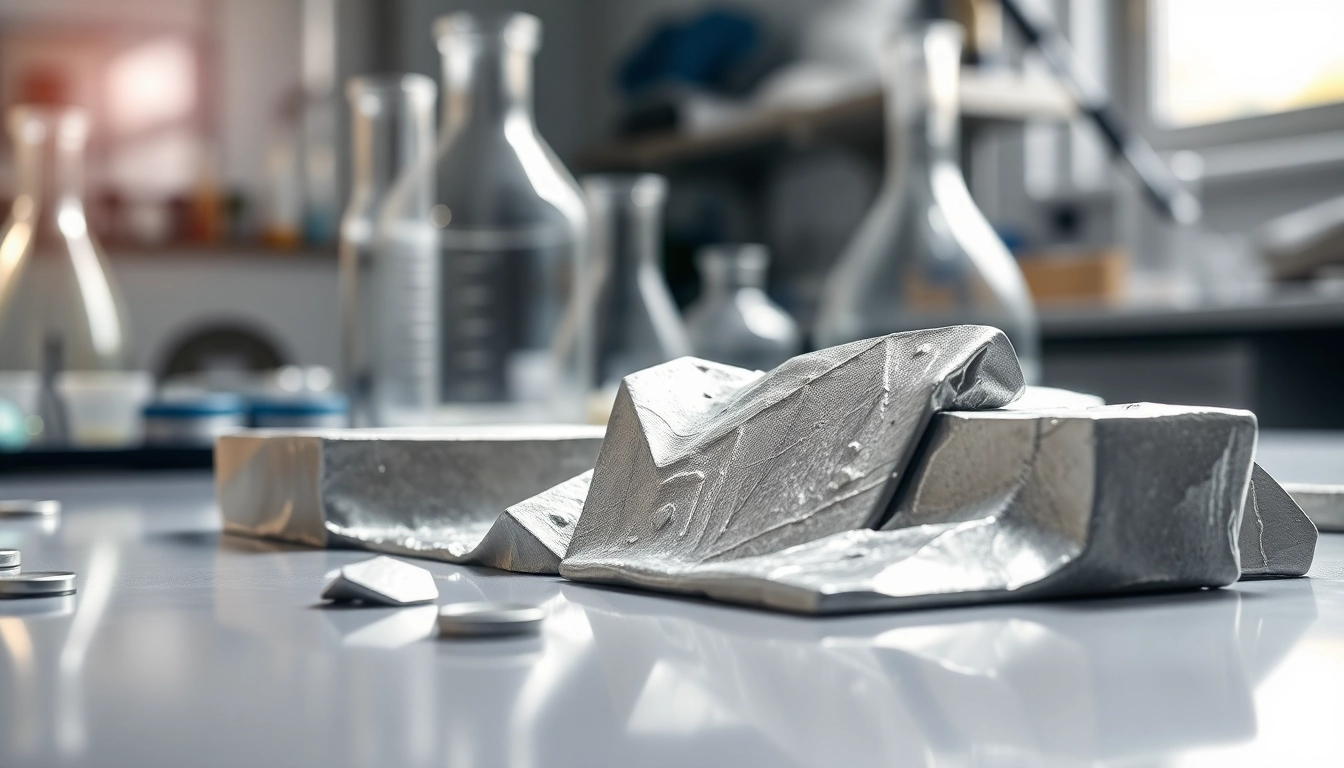
What is Beryllium?
Beryllium is a fascinating element with the chemical symbol Be and atomic number 4. It is recognized as a lightweight, steel-gray alkaline earth metal that exhibits a combination of strength and brittleness. Despite its remarkable physical characteristics, beryllium is not found freely in nature; instead, it occurs primarily in minerals such as beryl and bertrandite. The unique properties of beryllium lead to its utilization in various high-tech applications and industries, making it a material of interest in both scientific research and practical engineering. For a deeper exploration into beryllium, you may visit beryllium.
Chemical Properties of Beryllium
Beryllium is classified as an alkaline earth metal and is known for its relatively high melting point of 2,348°F (1,287°C) and high boiling point of 4,687°F (2,600°C). Its atomic mass is 9.012182 u. As a divalent element, it commonly forms Be²⁺ ions when it reacts with other elements. Beryllium is relatively inert, resisting oxidation at room temperature, which makes it suitable for applications where durability is necessary. Its chemical reactivity increases with temperature, and it can react with halogens and sulfur when heated.
Physical Characteristics of Beryllium
Physically, beryllium is characterized by its steel-gray color and luster, although it may appear dull when oxidized. The metal is light and possesses a high strength-to-weight ratio, making it useful in applications that require both toughness and lightness. At room temperature, beryllium is a solid but can be brittle, which adds to the complexity of handling it. Its density, being around 1.85 g/cm³, places it among the lightest of all metals. Additionally, it has excellent thermal conductivity and maintains structural integrity at high temperatures.
Occurrence and Sources of Beryllium
Beryllium is relatively rare in the earth's crust, accounting for about 0.00019% of its composition. The primary source of commercially usable beryllium is the mineral beryl, which is predominantly found in rocky formations. Other sources include bertrandite and chrysoberyl. Mining beryllium typically occurs through either open-pit or underground methods, depending on the location and depth of the deposits. Once extracted, beryllium is refined and made available in various forms, including metal, oxide, and various salts.
Applications of Beryllium
Use of Beryllium in Aerospace and Defense
Beryllium is one of the critical materials in the aerospace and defense industries due to its lightweight, exceptional stiffness, and thermal stability. Its applications range from satellite components and military missiles to spacecraft structures. For instance, beryllium mirrors and structural components are utilized in satellites because of their low mass and high stability under varying temperature conditions. Furthermore, its capacity to absorb neutron radiation makes it advantageous in nuclear applications, including as a moderator in nuclear reactors.
Industrial Applications of Beryllium
Beyond aerospace and defense, beryllium plays a vital role in manufacturing and industrial applications. Beryllium copper alloys are widely employed in creating tools and springs, electrical contacts, and in the making of various precision instruments. Its unique properties contribute to the durability and effectiveness of these products. Additionally, beryllium is utilized in the production of ceramics, where it enhances performance by providing thermal and electrical insulation while improving mechanical strength.
Emerging Uses of Beryllium
The landscape of beryllium usage is continuously evolving, with emerging applications observed in technology and material science. Researchers are exploring its potential in advanced structures for electronics, laser technology, and energy storage. As innovative methods for recycling and safe disposal of beryllium are developed, its usage in sustainable practices becomes increasingly viable, further expanding its potential role in modern industrial applications.
Health and Safety Implications of Beryllium
Health Risks Associated with Beryllium Exposure
While beryllium’s properties make it valuable, it also poses significant health risks upon exposure. The primary health concerns linked to beryllium include beryllium sensitization, which can develop into chronic beryllium disease (CBD), and increased risk of lung cancer. The sensitization occurs when the immune system reacts adversely to the element, often leading to severe respiratory issues. The importance of ongoing monitoring and education about these risks cannot be overstated, especially for workers in environments where beryllium dust or fumes may be present.
Safety Guidelines for Handling Beryllium
The Occupational Safety and Health Administration (OSHA) provides guidelines for safely handling beryllium in industrial settings. Key recommendations include using adequate ventilation systems, employing personal protective equipment (PPE) such as respirators and gloves, and conducting regular air quality assessments to monitor potential exposure levels. Educating employees about the risks associated with beryllium exposure and implementing safety protocols can significantly minimize health risks.
Monitoring and Regulations for Beryllium Use
Regulatory bodies actively monitor the use of beryllium and require compliance with safety standards to protect workers. The permissible exposure limit (PEL) is set to minimize health risks, and employers are obligated to perform regular monitoring and reporting of beryllium levels in workplaces. Industry professionals must stay informed about evolving regulations to ensure continued compliance and protection of their workforce.
Environmental Impact of Beryllium
Beryllium Mining and Its Effects
The environmental implications of beryllium mining are a significant concern. The extraction process can lead to habitat destruction and landscape alteration, affecting local ecosystems. Additionally, improper handling and disposal of beryllium-containing waste can result in contamination of soil and water sources. Sustainable mining practices and stringent environmental regulations must be implemented to mitigate these impacts.
Recycling and Disposal of Beryllium
Recycling beryllium offers a solution to its environmental effects. By reclaiming beryllium from industrial waste and products, the need for mining can be reduced, lowering the ecological footprint. Effective recycling processes not only conserve natural resources but also ensure the proper management of hazardous materials, thereby promoting sustainability within the industry.
Regulatory Framework for Beryllium Environmental Practices
Governments and environmental agencies have established regulatory frameworks to guide beryllium mining, processing, and disposal. Compliance with such regulations is essential for minimizing the environmental impact of beryllium. These regulations encompass guidelines for safe operating procedures in mining and the management of beryllium waste. Companies are encouraged to adopt best practices that prioritize environmental protection while upholding industry standards.
Future of Beryllium Research and Development
Innovations in Beryllium Usage
The future of beryllium is closely tied to ongoing research and development initiatives aimed at discovering new applications for this unique metal. Innovators are investigating beryllium's potential in nanotechnology, advanced electronic devices, and renewable energy technologies. As scientific understanding deepens, new formulations and compounds containing beryllium may emerge, leading to innovative material solutions that enhance technological advancements globally.
Research Areas for Beryllium Applications
Researchers are focused on a wide array of beryllium applications, from enhancing energy efficiency in industrial processes to developing novel beryllium alloys that exhibit superior performance characteristics. The integration of beryllium in emerging technologies, such as clean energy systems and additive manufacturing, holds promise for efficiency and innovation in various sectors.
Challenges in Beryllium Industry Growth
The beryllium industry faces multiple challenges, including regulatory hurdles, health safety concerns, and public perception issues. Overcoming these challenges requires a collaborative approach among stakeholders, including researchers, policymakers, and industrial manufacturers. Investment in sustainable practices, public education initiatives, and innovation-driven research strategies will prove crucial for the continued growth and acceptance of beryllium in a variety of sectors.
Frequently Asked Questions about Beryllium
What are the main properties of beryllium?
Beryllium is a lightweight, strong, and brittle alkaline earth metal with a high melting point and excellent thermal conductivity. Its unique properties make it ideal for aerospace and industrial applications.
Can beryllium cause health issues?
Yes, exposure to beryllium can lead to health problems such as beryllium sensitization, chronic beryllium disease, and lung cancer. Monitoring exposure levels is critical for worker safety.
How is beryllium used in aerospace?
Beryllium is used in aerospace for its lightweight and high-strength properties, notably in components like satellite structures and military applications where reliability is crucial.
What safety measures are necessary for handling beryllium?
Proper ventilation, protective gear, and adherence to OSHA guidelines are crucial for the safe handling of beryllium to prevent exposure and protect workers' health.
What is the importance of recycling beryllium?
The recycling of beryllium reduces environmental impact, conserves natural resources, and is essential for sustainable industrial practices, turning waste into valuable materials.