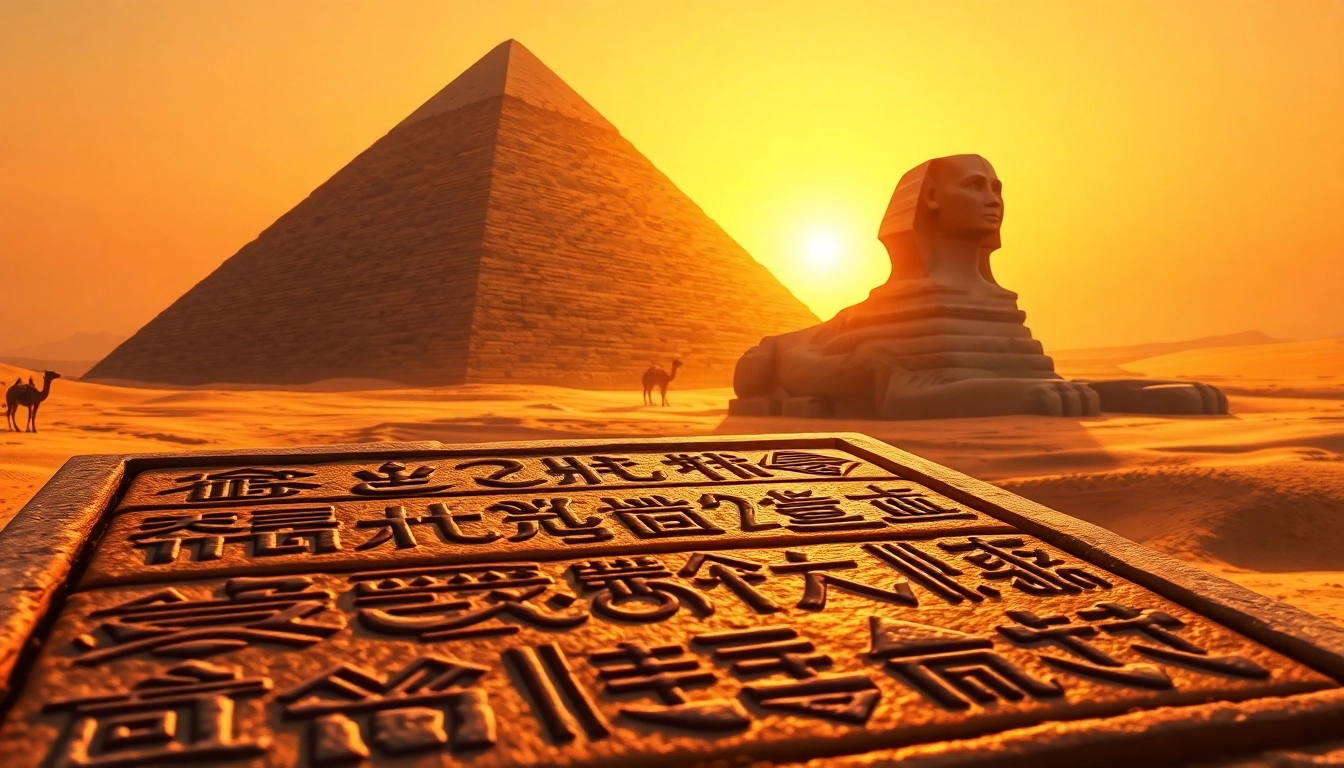
Introduction to Egyptian Pyramids
The Egyptian pyramids stand as monumental testaments to the architectural prowess and cultural richness of ancient Egypt. Erected around 4,500 years ago, these structures primarily served as tombs for the pharaohs, embodying their power, religious beliefs, and aspirations for the afterlife. The fascination with pyramids invites a deeper exploration of their meaning, construction, and cultural significance. For an insightful understanding, refer to https://piraminds.com/.
What are Pyramids?
Pyramids are large structures with a square or triangular base and sloping sides that meet at a point, often serving as tombs in ancient Egypt. The most renowned of these are the pyramids of Giza, which are among the largest and best-preserved. Their geometric design is not only aesthetically striking but also carries deep spiritual significance, symbolizing the journey of the soul towards the heavens.
The Historical Context of Pyramid Construction
The construction of pyramids reflects the evolution of ancient Egyptian society, concentrating on the Old Kingdom period (c. 2686–2181 BCE). This era witnessed a significant leap in architectural skills and socio-political organization. It was during this time that the concept of the afterlife became profoundly important, leading to the monumental task of building grand tombs that ensured the pharaohs' passage to the afterlife. This focus on the afterlife was tied to their religious beliefs, where the pyramids served as a gateway for the deceased rulers to reunite with the gods.
Importance in Ancient Egyptian Culture
Pyramids were not merely burial sites; they were central to the religious and cultural practices of ancient Egyptians. They represented a physical manifestation of the belief in resurrection and eternal life. The pyramid's shape was thought to aid the pharaoh's soul in ascending to the heavens and merging with the divine. In addition to the pharaohs, various temples and smaller tombs were constructed around them, underscoring their central role in ancient Egyptian spirituality and society.
The Main Pyramids of Egypt
Among Egypt's many pyramids, three major categories stand out: the Pyramids of Giza, the Nubian pyramids, and lesser-known structures scattered across the country.
Pyramids of Giza: An Overview
The Pyramids of Giza, particularly the Great Pyramid, are often considered the epitome of pyramid construction. Built during the Fourth Dynasty for the pharaoh Khufu, the Great Pyramid originally stood at 146.6 meters (481 feet) and was the tallest man-made structure for over 3,800 years. It is surrounded by two other significant pyramids: Khafre and Menkaure. These structures are still a focal point for archaeological studies and tourism, captivating visitors with their grandiosity and historical importance.
Nubian Pyramids and Their Significance
Located in modern-day Sudan, the Nubian pyramids were built by the Kingdom of Kush, which thrived alongside Pharaonic Egypt. Although smaller and characterized by a steeper angle, Nubian pyramids reflect the cultural exchanges between the two civilizations. They were constructed primarily as tombs for kings and queens, showcasing the rich burial customs that mirrored those of the Egyptians. Today, the remnants of these pyramids provide invaluable insights into the history and influence of both Egyptian and Kushite cultures.
Comparison of Egyptian and Nubian Pyramids
The primary differences between Egyptian and Nubian pyramids lie in their architecture and burial rites. While Egyptian pyramids emphasize grandeur and are often surrounded by elaborate mortuary temples, Nubian pyramids are more streamlined and compact. Additionally, Nubians tended to build their pyramids in clusters, focusing on the sanctity of the burial ground rather than on individual grand structures. In both cases, these pyramids served to honor the dead and facilitate their transition to the afterlife, although their cultural expressions of this belief varied significantly.
Construction Techniques of the Pyramids
Understanding how the pyramids were built reveals the advanced engineering skills of ancient Egyptians. Despite the lack of modern technology, their methods for quarrying, transporting, and assembling massive stones showcase remarkable ingenuity.
Materials Used in Pyramid Construction
The primary materials used in constructing most Egyptian pyramids include limestone, granite, and basalt. Limestone was often quarried locally and used for the outer casing stones, providing a smooth surface that reflected the sun’s light beautifully. Granite was imported from Aswan and utilized in the burial chambers and for intricate interior designs. This intricate selection of materials not only contributed to the pyramids' longevity but also symbolized the wealth and power of the pharaohs.
Innovative Techniques of the Ancient Egyptians
The construction of pyramids required a multitude of innovative techniques. One of the most fascinating is the use of ramps, which were employed to transport heavy stones to higher levels. The most debated aspect of pyramid construction is the exact design of these ramps—straight, zigzagging, or circular. Additionally, the Egyptians utilized levers and sledges, often lubricating the sand to facilitate smoother movement of the stones. These cutting-edge techniques demonstrate an impressive understanding of physics and engineering.
Debunking Myths about Pyramid Construction
Myths surrounding the construction of the pyramids often outweigh the facts. Contrary to popular belief, there is no credible evidence suggesting aliens were involved in their construction. Instead, extensive archaeological studies indicate that thousands of skilled laborers, not slaves, were employed to build these monumental structures. They worked in organized teams and were well-fed, highlighting their importance to society. Additionally, the construction process was documented on stone walls, indicating a sophisticated understanding of project management long before modern practices were established.
Modern Discoveries and Research
Recent archaeological ventures have brought forth a wealth of information about the pyramids that continuously reshapes our understanding of ancient Egypt.
Recent Archaeological Findings Related to Pyramids
Excavations around the pyramids have uncovered numerous artifacts, including tools that were likely used during construction, and remnants of workers' villages. These findings reveal insights into the daily lives of laborers and the organization of activities surrounding pyramid construction. Some recent discoveries even suggest the existence of previously undiscovered chambers, which could hold significant historical artifacts related to the pharaohs and their rituals.
The Role of Technology in Understanding Pyramids
Modern technology has played a crucial role in uncovering the secrets of the pyramids. Techniques such as ground-penetrating radar, infrared thermography, and 3D scanning have enabled researchers to peer beneath the surface, revealing hidden compartments and construction techniques inaccessible through traditional excavation methods. These technologies not only facilitate a deeper understanding of architectural practices but also help in preserving these ancient structures for future generations.
New Theories on Pyramid Functions
While the primary function of the pyramids is understood to be burial, recent studies suggest they may have had additional purposes. Some researchers theorize that pyramids served as astronomical observatories aligned with true north and celestial events, while others propose that they acted as power centers, reinforcing the divine right of kings. These theories are continually evolving as new evidence emerges, enriching our understanding of these enigmatic structures.
Visiting the Pyramids Today
The pyramids remain one of the most visited historical sites in the world, attracting millions of tourists each year. Their popularity underscores the importance of responsible tourism and preservation efforts.
Tourism Opportunities Around the Pyramids
Tourism around the pyramids offers numerous opportunities for exploration and learning. Visitors can engage in guided tours that provide historical context, explore the nearby Giza Plateau, and even venture inside some of the pyramids. Camel and horse rides around the pyramids can enhance the experience, offering a unique perspective of these monumental structures. Various visitor centers also provide educational resources, enriching the journey through the ancient world.
Best Practices for Pyramid Preservation
With the increasing influx of tourists, it is vital to implement effective preservation practices. Ensuring visitor compliance with preservation guidelines can mitigate the impact of foot traffic on the fragile structures. Moreover, ongoing restoration efforts, surveillance, and technology-assisted monitoring can help maintain the structural integrity of these ancient edifices. Educating tourists about the significance of these sites fosters a culture of respect and conservation.
The Future of Pyramid Research and Conservation
Future research may focus on integrating more advanced technologies in archaeology, potentially unearthing new findings that could change our perception of ancient Egyptian history. Conservation efforts will undoubtedly evolve, utilizing cutting-edge techniques to ensure the longevity of these monuments. Collaboration among international organizations may facilitate shared knowledge and resources, ultimately leading to better protection and understanding of the pyramids.
FAQs
What are the main purposes of the Egyptian pyramids?
The Egyptian pyramids primarily served as tombs for pharaohs, symbolizing their power and connection to the divine.
How were the pyramids constructed?
Construction involved thousands of laborers using simple tools, moving massive stone blocks, and employing ramps and levers.
What materials were used in the pyramids?
Pyramids were primarily built using limestone, granite, and other local stones, meticulously quarried and transported.
Why are there so many pyramids in Egypt?
There are numerous pyramids as each pharaoh built their own tomb to ensure a safe journey to the afterlife, reflecting their status.
Can tourists visit all the pyramids in Egypt?
While many pyramids are accessible, some are located in remote areas, and regulations may limit visits to ensure preservation.